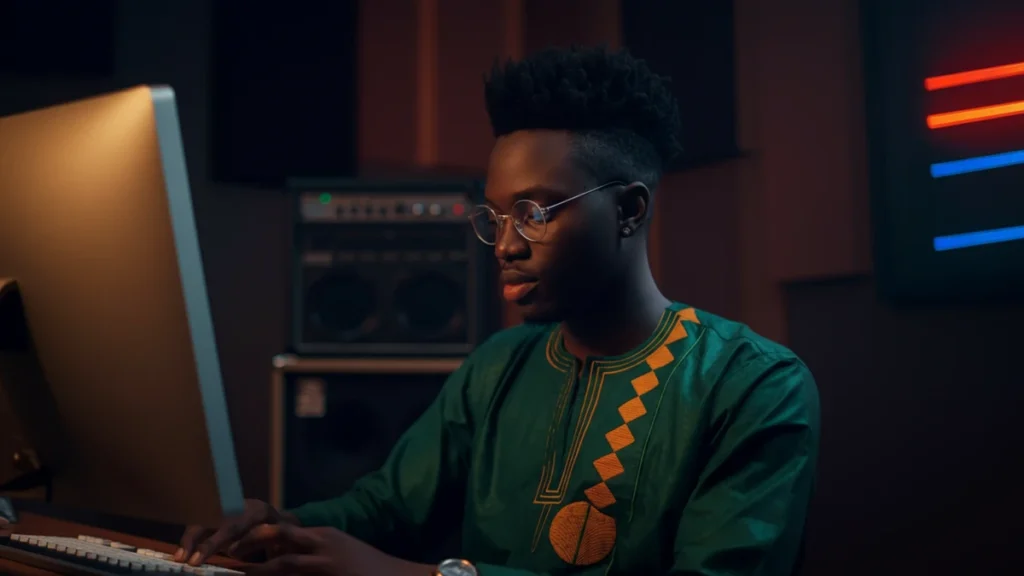
Young producer in a green African dashiki at a computer in a warm-lit recording studio. | AfroMusic.News - AI Generated
From Lagos to the World: A Sonic Explosion
Once a niche sound, the infectious rhythms of Afrobeats are now an undeniable force in the global soundscape. From the inescapable hook of Rema and Selena Gomez’s “Calm Down” to the stadium-filling anthems of Burna Boy, the genre has transcended its West African origins to become a worldwide phenomenon. This article delves into the drivers behind the global expansion of Afrobeats, examining the data, digital platforms, key collaborations, and major investments that are reshaping the modern music industry. It’s a story of cultural exchange, economic empowerment, and artistic innovation on a global scale.
The Numbers Don’t Lie: Afrobeats by the Data
The rise of Afrobeats is not just anecdotal; it’s a data-driven reality. Streaming platforms have been instrumental in its growth, with consumption increasing at an explosive rate. Since expanding into Nigeria in 2021, Spotify has reported a staggering 5,022% growth in Afrobeats streams, while music consumption in sub-Saharan Africa grew by 114%, outpacing other regions. This surge in listenership prompted an important response. In 2022, Billboard, in partnership with Afro Nation, launched the U.S. Afrobeats Songs chart. This landmark moment solidified the genre’s mainstream recognition in the world’s largest music market. Rema’s “Calm Down” is a prime example. It became the first track by an African artist to surpass one billion streams on Spotify and held the top spot on the Billboard Afrobeats chart for a record-breaking run of over a year. This digital success translates into significant economic impact. Nigeria’s music industry alone generated an estimated $600 million in 2024 and is projected to exceed $1 billion by 2033.
Forging Alliances: The Power of Cross-Continental Collaboration
A key strategy fueling the global expansion of Afrobeats has been high-profile collaborations between African artists and international superstars. These partnerships serve as cultural bridges, introducing the genre to new audiences and adding a layer of global appeal. Wizkid‘s feature on Drake’s 2016 mega-hit “One Dance” is often cited as a pivotal moment that helped push Afrobeats into the global mainstream. Since then, the floodgates have opened. High-profile examples include:
- Burna Boy with Coldplay’s Chris Martin
- Fireboy DML with Ed Sheeran
- Tems with Future and Justin Bieber
- Oxlade with Camila Cabello
These collaborations are mutually beneficial. International artists gain cultural relevance by tapping into the vibrant Afrobeats sound, while African artists gain access to new markets and fanbases. Recent examples, like KCEE’s remix of “Ojapiano” with OneRepublic and Asake’s work with French artist Tiakola and DJ Snake, show the trend is not only continuing but diversifying.
The Digital Accelerators: Social Media and Streaming’s Role
It’s impossible to discuss the modern music landscape without acknowledging the immense power of social media, particularly TikTok. The platform has become a primary engine for music discovery, capable of turning a regional hit into a global anthem overnight. Artists like CKay exemplify this new path to success; his 2019 song “Love Nwantiti” became a worldwide smash via TikTok virality years after its initial release. The app’s algorithm, which prioritizes discovery, allows artists to bypass traditional gatekeepers and connect directly with a global audience. This direct connection to listeners has proven powerful, with many tracks on the Billboard Global 200 starting their journey as viral TikTok trends. This dynamic has fundamentally changed music marketing, making viral dance challenges and user-generated content as crucial as radio play. Beyond discovery, streaming services like Spotify and Apple Music play a vital role in sustaining this momentum. They use curated playlists like “African Heat” to guide listeners and foster deeper engagement.
The Business of the Beat: Investment and Infrastructure
The commercial success of Afrobeats has not gone unnoticed by the world’s largest music companies. Major labels like Universal Music Group (UMG) and Warner Music Group (WMG) have made significant investments in the African music market, recognizing its immense growth potential. In a landmark 2024 deal, UMG acquired a majority stake in Mavin Global, the iconic Nigerian label founded by Don Jazzy and home to stars like Rema and Ayra Starr. This move followed similar strategies, such as WMG’s partnership with Nigeria’s Chocolate City label and investments in digital distributor Africori. These investments are about more than just signing artists; they are about building a sustainable ecosystem. The deals provide African labels with global distribution, marketing muscle, and capital. At the same time, they give major labels a crucial foothold in the world’s fastest-growing region for recorded music consumption. This influx of capital is professionalizing the industry, funding everything from artist development to live tours and festivals.
What’s Next for the Pan-African Sound?
While often used as a catch-all, “Afrobeats” itself is an umbrella term for a diverse fusion of sounds. The continued success of the genre is paving the way for other African sounds to break through globally. The rise of Amapiano, a subgenre of house music from South Africa characterized by its distinct log-drum basslines and jazzy chords, is a prime example. Artists like Tyla, whose Amapiano-infused track “Water” became a global hit, demonstrate the continent’s rich sonic diversity. The future points towards even more cross-pollination, with artists like Asake blending Afrobeats with Amapiano, jazz, and orchestral elements in his latest work. As infrastructure improves and digital penetration deepens across the continent, this trend is set to continue. The global expansion of Afrobeats is setting the stage for a broader Pan-African musical movement, ensuring its influence will be felt for years to come.
Your Gateway to the Global Sound
The rise of Afrobeats is a testament to the power of creative innovation and digital connectivity. As new platforms emerge and the world becomes more interconnected, the tools for creation and distribution are more accessible than ever. This movement is not just about music; it’s about empowering creators and democratizing access to the global stage. If you’re inspired by this story of global expansion and want to be part of the future of the creator economy, there are platforms designed to help you build and grow. Discover the tools that are empowering the next generation of global creators.
Explore the Future of Music Creation
About Author