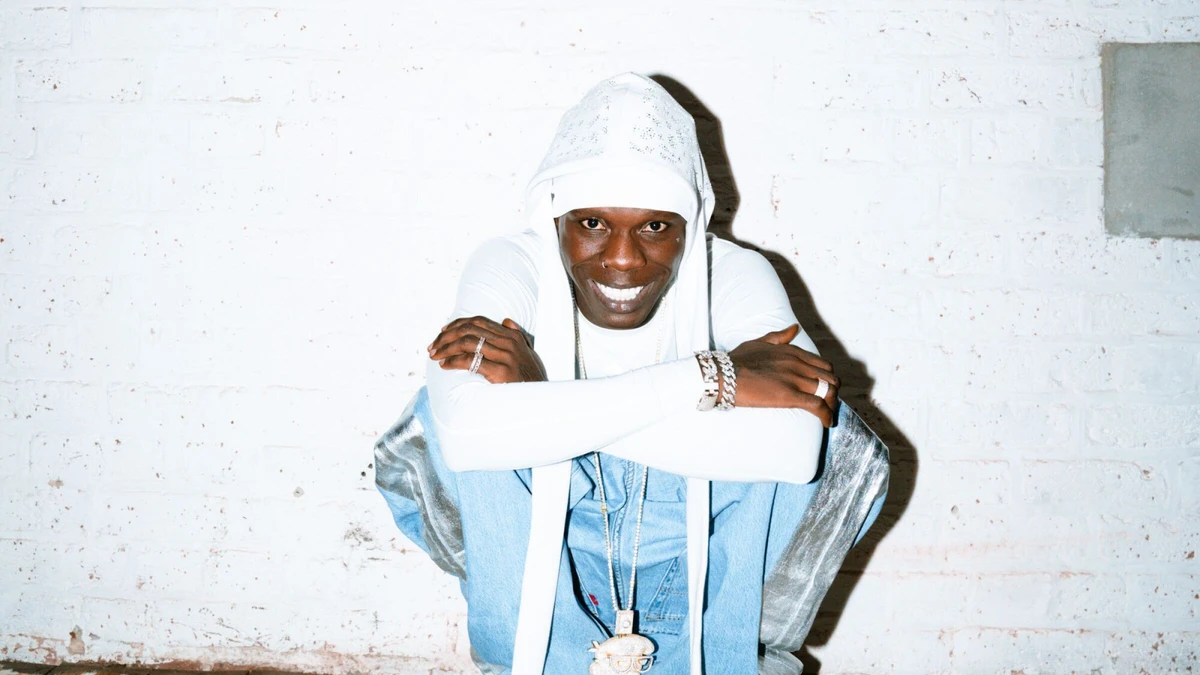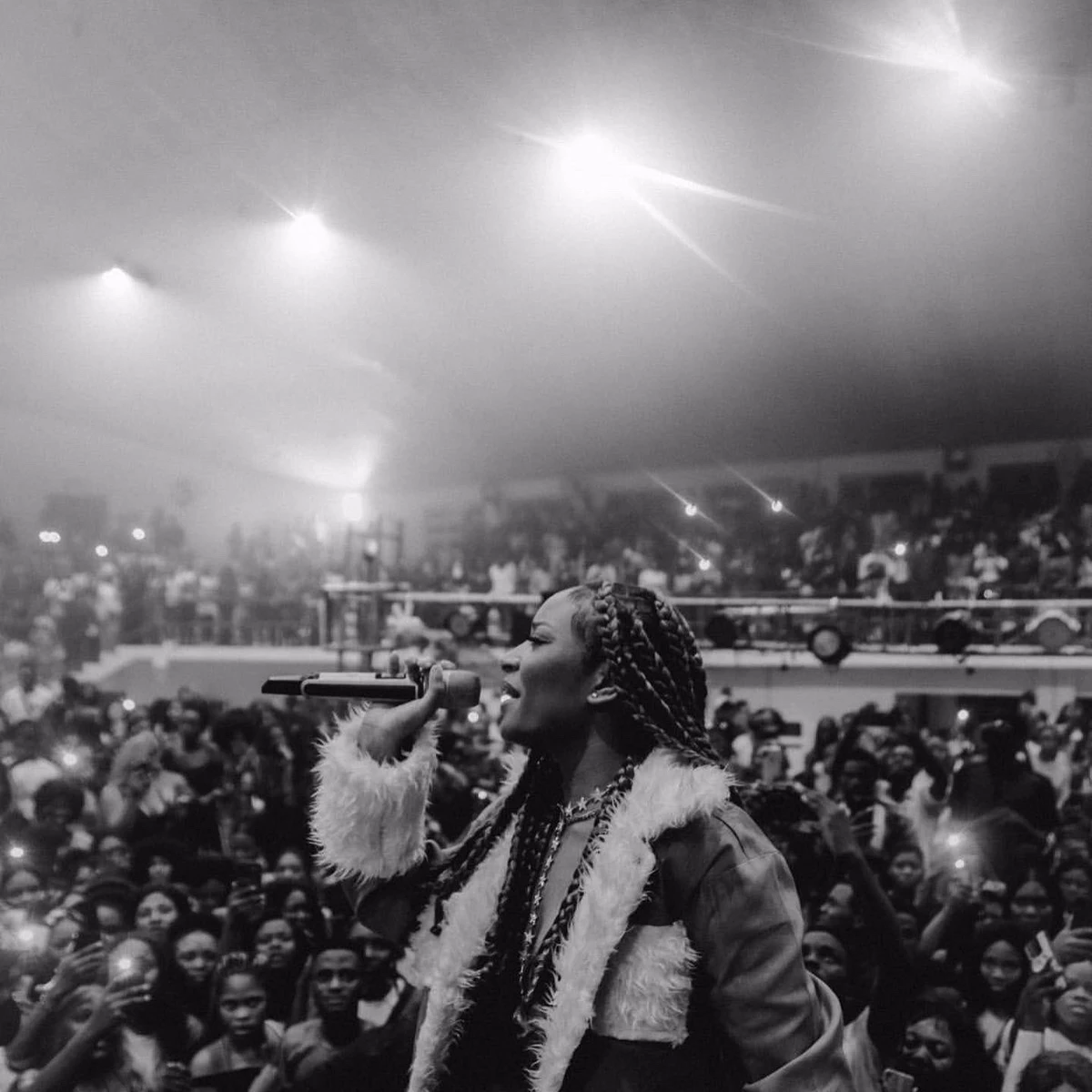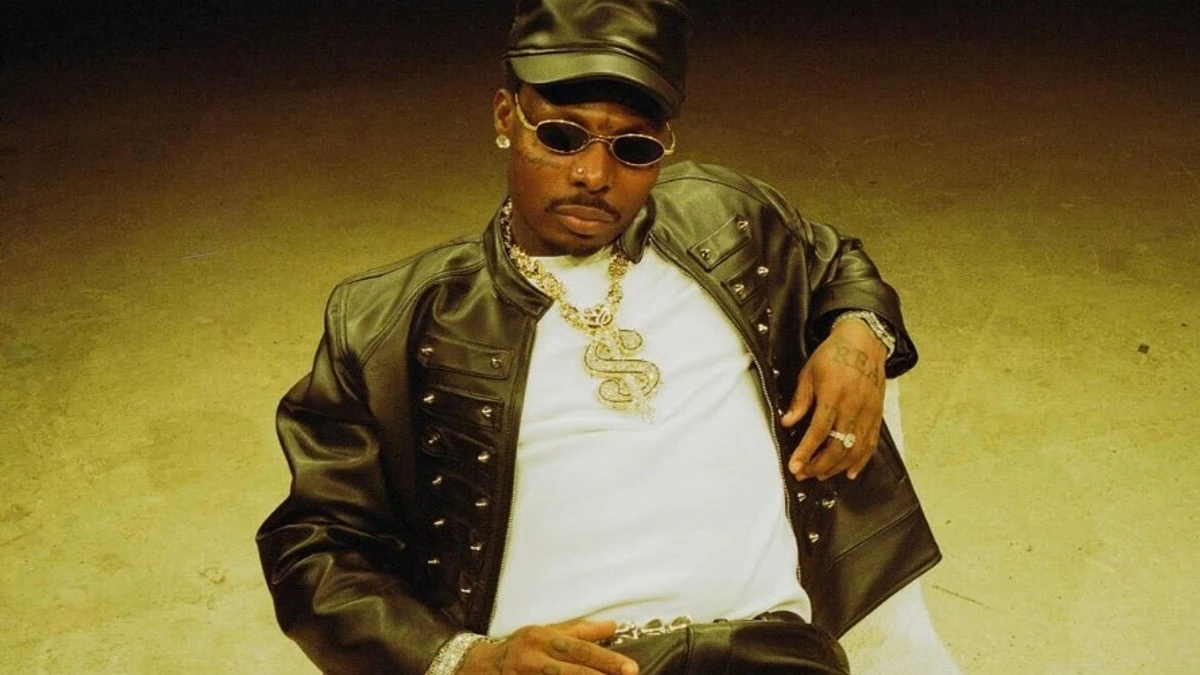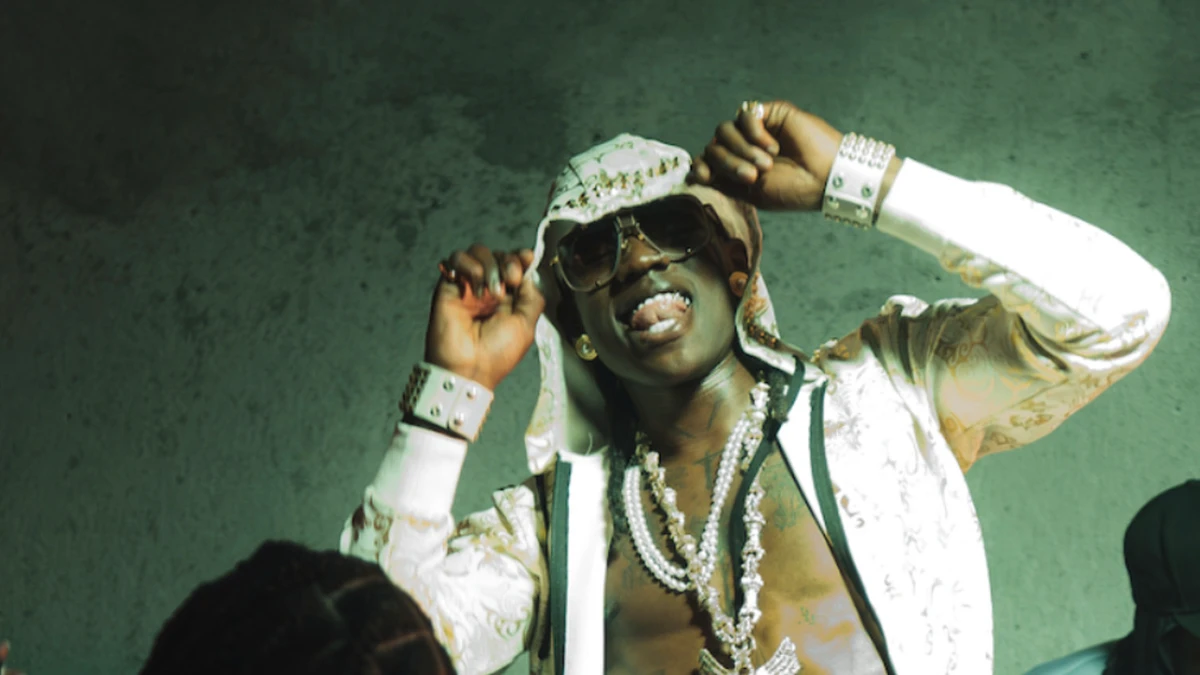


Asake performing live
Asake performing live
Billboard’s US Afrobeats Songs chart has twenty positions. For the week of 12 September, Asake occupies eight of them.
Not eight songs somewhere in the wider chart. Eight of the twenty most popular Afrobeats records in America at once, held by one artist from Lagos, five of them as the lead name and three as a guest on somebody else’s record.
Eight Positions, Counted
The chart published by Pulse Ghana puts his own releases at numbers 5, 7, 11 and 18 with Forgiveness, Gratitude, MCBH and Wa.
The collaborations fill in around them. Worship with DJ Snake sits at 12, Eja Meja with BNXN at 14, That Girl! with Darkoo at 15, and a feature on Blaqbonez’s Chanel at 16.
Read down the middle of that chart and his name appears in every second row. Positions 11 through 18 contain six entries carrying it, which is less a run of hits than an occupation of the chart’s entire midsection.
The Half That Belongs to Other People
The feature count is the part worth dwelling on, because it describes a different kind of position in the scene than a run of solo hits would.
Three of the eight are records led by someone else. On That Girl! he appears alongside Darkoo; on Chanel he is the guest on a Blaqbonez record; on Eja Meja he shares with BNXN. Each of those is another artist’s release that reached the American top twenty with him on it.
That pattern is how a scene distributes its own momentum. A feature is a transfer of audience, and an artist whose presence reliably moves a record into the American chart becomes a piece of infrastructure for everyone around him. The songs at 14, 15 and 16 are not his career. They are other people’s careers, moving faster because he is on them.
A City, Not a Solo Run
What makes this something other than one artist having a good quarter is who else is on the same twenty.
Victony sits at 2 with Slick. Seyi Vibez holds two positions, Back 2 U at 10 and GTA at 13. Rema is at 17 with TEA. FOLA appears twice, on B4 B4 at 8 and with Attention! at 20. Blaqbonez has his own entry at 19 as well as the feature at 16.
Two records debuted this week: Back 2 U entering at 10 and Big Performer at 19. New entries in the top half of a national chart, in the same week one artist is holding eight slots, means the circuit is producing arrivals rather than simply defending its established names.
That is the healthier signal. A scene with one dominant figure and no new entries is a scene with a succession problem. A scene where the dominant figure is on eight records and two newcomers still break the top twenty is a scene with depth underneath.
What an Eight-Entry Week Is Built On
None of this arrived without a body of work behind it. Asake released his fourth studio album M$ney earlier this year, a thirteen-track project announced through Clash, working themes of ambition, resilience and the realities of fame.
The album’s own guest list explains some of the chart spread. Worship with DJ Snake is on it, giving the record a route into European dance programming that a straight Afrobeats release does not have. A collaboration with the amapiano producer Kabza De Small points south, toward the South African scene that has been reshaping the genre’s rhythm section for several years.
The result is a catalogue with several different doors into it. A listener arriving through a French producer’s audience, a South African production style or a Nigerian feature is arriving at the same artist, and the chart counts all of them together.
Who Else the Chart Counts as Afrobeats
There is one entry in the top five that complicates any clean reading of this chart, and it is worth looking at directly. At number 4 sits Mi Chico, credited to DJ Goja, Jason Derulo and Melody, a record whose personnel comes from European dance production and American pop rather than from Lagos, Accra or Johannesburg.
Its presence says something about how the category is drawn. Billboard’s chart is a measure of what American listeners are consuming as Afrobeats, which is not the same thing as a measure of what Nigerian artists are releasing. The rhythmic signature of the genre has travelled far enough that producers with no connection to the scene can build records on it and land near the top of its chart.
For the artists in the scene this cuts two ways. A genre whose characteristic sound is being adopted by international pop production is a genre with reach, and that reach is what makes the touring and licensing economics work. It is also a genre whose defining chart can be entered by people who did not build it, which changes what a chart position is worth as evidence of anything.
Set against that, holding eight of twenty becomes a slightly different achievement. Asake is not only outperforming the other Nigerian and South African artists on the list. He is doing it on a chart that international pop is actively competing for, and the eight positions are held against that competition rather than inside a protected category.
It also clarifies why the feature economy described above matters so much. When outside producers can enter the genre by adopting its rhythm, the thing that cannot be replicated from outside is the network: which artists will appear on whose record, and whose name moves an audience. That is held inside the scene, and it is the part a chart position cannot buy.
Why the American Chart Is the One That Matters Here
Nigerian artists have been filling rooms across the diaspora for years, and domestic dominance in Lagos has never needed American validation to be real.
The US chart matters for a narrower reason: it is the market where playlist placement, radio formats and touring economics compound most steeply. Holding eight of twenty positions there is not a measure of how loved an artist is at home. It is a measure of how deep into the American listening infrastructure the music has been pushed.
And the diaspora route runs in both directions now. The genre’s institutions have been following its audience outward, which is what happened when the Headies took Nigeria’s biggest music prize to Canada. A chart week like this one is the commercial version of that same movement.
What Would Have to Change
An eight-entry week is not a stable position, and it is worth being clear about what it actually measures.
Chart entries reflect recent streaming and airplay, which means they decay. Several of these songs are months old, and their positions will fall as newer records arrive. The two debuts this week are the mechanism by which that happens, and the artists behind them are the ones most likely to take the slots.
The more durable question is whether the feature economy holds. If his presence continues to carry other artists’ records into the top twenty, he stays central to the scene regardless of how his own releases perform. If it stops working, the eight becomes four fairly quickly, because half of the current count belongs to records he did not lead.
For now, the chart reads the way a scene’s peak usually reads: one name everywhere, a handful of established artists holding firm around it, and two new names arriving in the same week to start the process over.
About Author